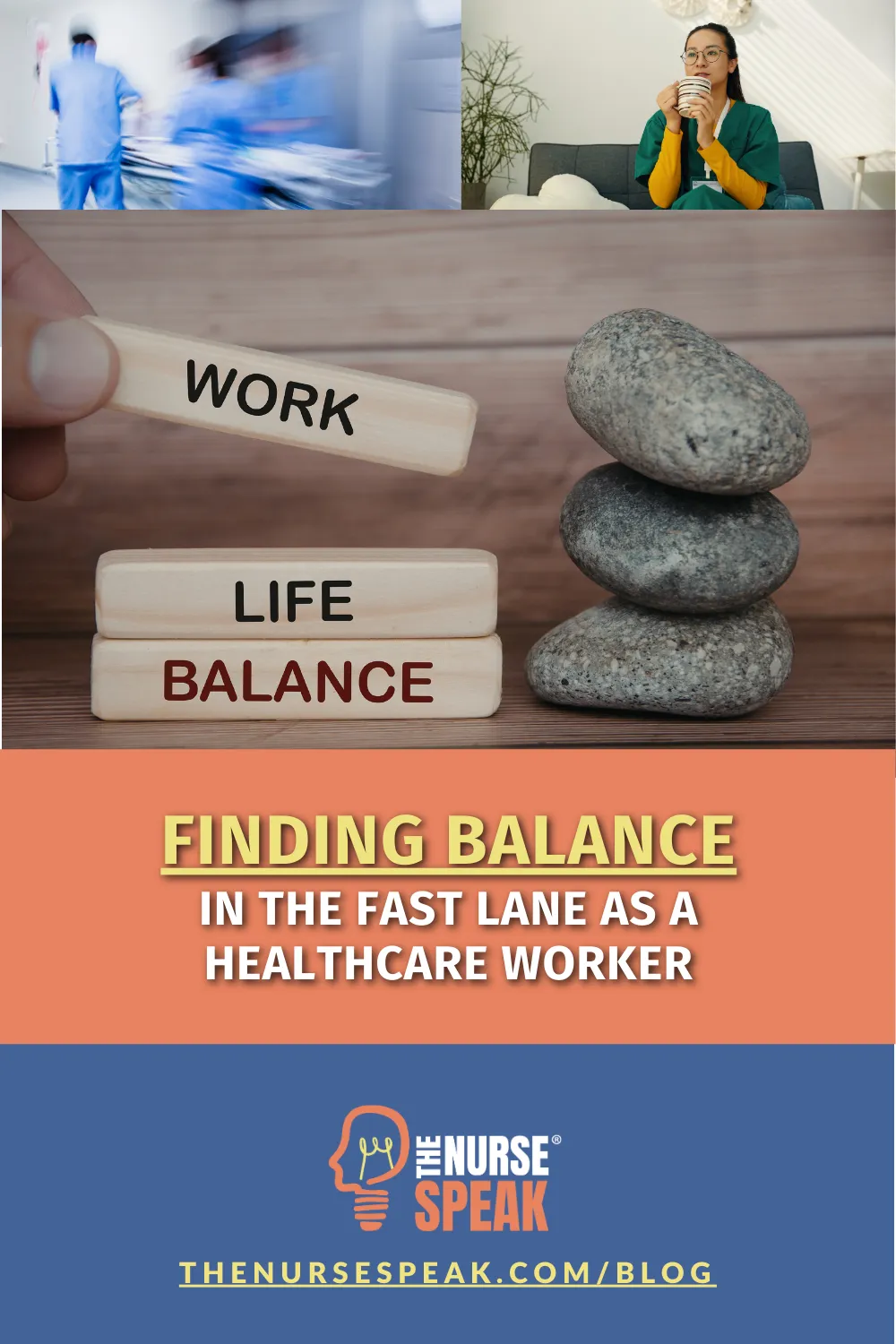
Finding the Balance in the Fast Lane as a Healthcare Worker
If you're reading this during a rare moment of downtime between shifts, grabbing a quick bite before another meeting, or scrolling while waiting for the next admit—I see you. The healthcare hustle is real, and I'm often asked how I manage a demanding nursing role, two businesses, a podcast, and an actual life outside of scrubs.
The truth? I don't always nail it. But I've learned some hard lessons about balance, starting with my own burnout early in my career. That wake-up call taught me that slowing down isn't optional—it's essential if you want to be in this profession for the long haul.
The Reality Check We All Need
Whether you're a CNA picking up extra shifts to make ends meet, an LPN juggling family responsibilities with a demanding unit, an RN drowning in documentation, or a Unit Manager feeling like you're constantly putting out fires—the fast lane looks different for all of us. And let's be honest: our paychecks look different too, which affects how we approach self-care and balance.
But here's what I've discovered: balance doesn't have to break the bank or require a complete life overhaul. It requires intention, flexibility, and meeting yourself where you are—both financially and emotionally.
Dedicate Time for Yourself (Yes, Even on a Tight Budget)
I know what you're thinking: "Damion, I barely have time to pee during my shift, let alone 'dedicate time for myself.'" I get it. But daily self-care doesn't mean expensive spa days or gym memberships you'll feel guilty about not using.
For CNAs and LPNs:
Free wins: A 10-minute walk before your shift, sitting in your car for 5 minutes of silence before heading inside, or a YouTube yoga video at home. Your downtime doesn't need a price tag.
Low-cost options: A library card gives you free audiobooks for your commute, community centers often have affordable fitness classes, and apps like Insight Timer offer free meditation.
The power move: Protect your days off. I know the temptation to pick up extra shifts is real when bills are tight, but burning yourself out serves no one—least of all your future self.
For RNs and Supervisors:
Invest strategically: Consider a gym membership or a hobby that genuinely recharges you. If you can afford $50-100/month for something that preserves your mental health, it's not selfish—it's maintenance.
Set boundaries: Your phone doesn't need to be on 24/7. Your unit will survive. Block out time on your calendar for activities that bring you joy, and treat those appointments like you would any other non-negotiable commitment.
For Nurse Managers and Administration:
Model the behavior: Your team is watching. When you prioritize self-care, you give them permission to do the same. Consider it leadership development.
Get creative: Use your position to advocate for staff wellness initiatives that benefit everyone—including you. Mindfulness rooms, flexible scheduling, and adequate staffing aren't just nice-to-haves; they're retention strategies.
Spend Time With Loved Ones (Connection Over Perfection)
After 15+ years in nursing, I can tell you this: the people who love you don't need Instagram-perfect quality time. They need your presence, even when you're exhausted.
For everyone, regardless of paycheck:
Be strategic: Can't make the family dinner? Have breakfast together instead. Working nights? Schedule a standing video call during your break. It's about consistency, not perfection.
Communicate clearly: Tell your loved ones when you're in survival mode versus when you have bandwidth. They can't read your mind, and neither can you read theirs.
Say no to guilt: Missing events sometimes is part of healthcare life. What matters is showing up when you can and being fully present when you do.
Budget-friendly connection:
Game nights at home beat expensive dinners out
Nature walks are free and therapeutic
Video calls with distant family cost nothing
Potluck gatherings split the cost and the effort
You've got this—connection doesn't require a credit card, just genuine attention.
Take Mini Vacations (Staycations Count!)
Listen, I'd love to tell you to jet off to Bali between shifts, but that's not reality for most of us. However, frequent breaks—even small ones—genuinely improve life satisfaction and job performance.
For CNAs and LPNs:
The staycation: Turn your phone on "Do Not Disturb," order your favorite takeout, binge that show everyone's talking about, and don't answer work calls on your day off. That's a vacation.
Day trips: Explore a neighboring town, visit a museum on free admission day, or have a picnic in a park you've never been to. Breaking routine refreshes your brain.
The mental escape: Even if you can't physically leave, you can mentally check out. Audiobooks, podcasts (hey, might I suggest "Nursing Strategies for Success"?), or losing yourself in a hobby for a few hours counts.
For RNs, Supervisors, and Management:
Plan ahead: Use your PTO strategically. Even three-day weekends can feel restorative when you actually disconnect from work.
Go further if you can: If your budget allows, investing in a real getaway—even once a year—can recharge you for months. Think of it as preventive healthcare for your sanity.
The key: Whatever your budget, the goal is to break the routine and create experiences that remind you there's life beyond the unit.
Take Recovery Time When Needed (Burnout Is Real)
Here's where I need you to hear me clearly: burnout isn't a badge of honor. It's a warning sign that something needs to change.
Recognize the signs early:
You're constantly irritable or emotionally numb
Every shift feels impossible before it even starts
You're making mistakes you wouldn't normally make
You're fantasizing about walking out mid-shift
Physical symptoms: headaches, insomnia, stomach issues
What to do about it:
Immediate action (everyone):
Use your sick days when you need them—mental health counts
Talk to someone: a trusted colleague, EAP counselor, or therapist
Reassess your commitments: what can you delegate, postpone, or eliminate?
For CNAs and LPNs:
If you're working multiple jobs to survive, I see you. Consider: could you reduce hours at one job if it means keeping your health? Sometimes less money is better than no money because you're too burned out to work at all.
Look into hospital or facility assistance programs—many offer free counseling services.
For RNs and Supervisors:
Advocate for staffing ratios and reasonable assignments. You can't care for others if you're running on empty.
Consider: is your current role sustainable long-term? Sometimes burnout is telling you it's time for a change—different unit, different role, different path entirely.
For Management:
You set the tone. If you're burned out, your entire team feels it.
Create systems that prevent burnout rather than just reacting to it: adequate staffing, mental health resources, and a culture where asking for help isn't seen as weakness.
Sometimes the most responsible thing you can do is take a leave when you need it. It's not abandoning your team—it's modeling healthy behavior.
The Bottom Line
Achieving balance isn't a destination you reach and then you're done. It's a continuous process of checking in with yourself, adjusting when things feel off, and prioritizing your health and happiness alongside your commitment to patient care.
Because here's what I know after all these years: burnt-out nurses can't give their best care. Exhausted supervisors can't lead effectively. Depleted managers can't create healthy work environments. Taking care of yourself isn't selfish—it's essential to taking care of others.
You didn't enter healthcare to sacrifice your entire life. You came to make a difference, and you can't do that if you're running on fumes.
So wherever you are in your career—whether you're just starting out as a CNA, climbing the ladder as an RN, or leading teams as a manager—give yourself permission to find your own version of balance. It might not look like anyone else's, and that's perfectly okay.
Start small. Pick one thing from this article to try this week. Not five things. One. Build from there.
You've got this. And on the days when you don't feel like you've got this? That's okay too. That's being human in a profession that sometimes forgets we are.
Take care of yourselves out there. The patients need you healthy, whole, and present—not just physically there but actually in it.
Best Wishes,
-Damion

Damion Jenkins, MSN, RN, is Director of Education & Staff Development, entrepreneur, and host of "Nursing Strategies for Success" podcast. With 16+ years in nursing, he's passionate about empowering healthcare professionals to build sustainable, fulfilling careers without sacrificing their wellbeing.


