Prevalence of Bullying in Nursing and How to Handle It
Let's talk about a MAJOR PROBLEM that we all face as Healthcare Workers in this country... we're losing incredible nurses not because they can't handle the job, but because they can't handle the way they're being treated by their own colleagues. And that's a problem we can't afford to ignore any longer.
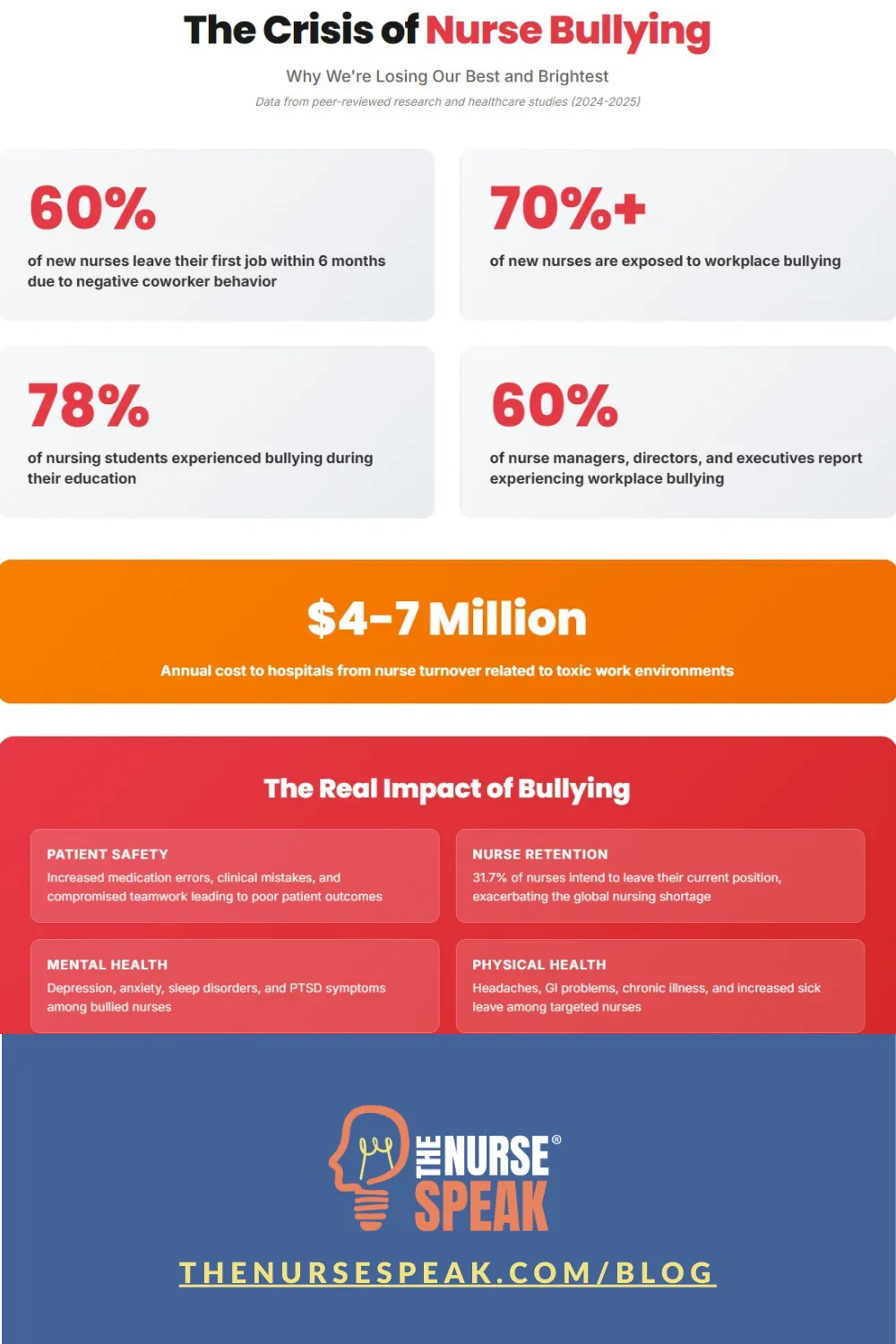
The statistics are sobering—60% of new nurses leave their first job within six months due to negative behavior from coworkers. Not because of the demanding patient care. Not because of the long hours. But because of how they're treated by other nurses. We have to do better.
The Reality of Nurse Bullying
Dr. Renee Thompson, DNP, RN, FAAN, founder of the Healthy Workforce Institute, has dedicated her career to tackling this crisis head-on. Her mission? To create a world where bullying and incivility are immediately rejected and kindness, respect, and professionalism become the new norm.
"When disruptive behaviors are ignored in healthcare, bad things happen to patients and employees."
And she's absolutely right. The research backs this up in ways that should alarm every healthcare leader:
• Over 70% of new nurses are exposed to workplace bullying
• 78% of nursing students experienced bullying during their education
• 60% of nurse managers, directors, and executives report experiencing workplace bullying
• Nurse turnover related to toxic work environments costs hospitals $4-7 million annually
This isn't just about hurt feelings. This is about patient safety, healthcare quality, and the future of our profession.
What Workplace Incivility Actually Looks Like
Sometimes bullying is obvious—the eye rolls, the hostile comments, the deliberate exclusion. But often it's more subtle:
• Withholding critical information from a colleague
• Making demeaning comments disguised as "jokes"
• Undermining someone's competence in front of patients or other staff
• Refusing to help when a colleague is clearly overwhelmed
• Spreading rumors or gossiping through text chains and private social media groups
Dr. Thompson emphasizes that culture change doesn't start with training rollouts, revised policies, or posters on the wall. It starts with individual accountability and leadership commitment.
The Real Cost of Silence
"We are hemorrhaging so many amazing nurses because of the bullies. We need to stop using silence as a strategy and start speaking up!"
Dr. Thompson is calling out what many of us have witnessed but been afraid to address. When we stay silent about toxic behavior, we're not just allowing it to continue—we're actively participating in a culture that drives talented nurses out of the profession.
The consequences extend beyond turnover:
• Increased medication errors and clinical mistakes
• Lower patient satisfaction scores
• Higher rates of nurse burnout, depression, and anxiety
• Compromised teamwork and communication
• Physical health problems including headaches, sleep disorders, and GI issues
Actionable Strategies to Address the Problem
Here's what you need to know: addressing workplace incivility requires a comprehensive, multi-level approach. It's not enough to just have a policy—you need a strategy that actually works.
1. Leadership Must Set the Tone
As Dr. Thompson reminds us, disruptive behaviors rarely start on the front line, and they're almost never fixed there either. Leadership must model professional behavior, hold everyone accountable (regardless of clinical competence), and intervene immediately when incivility occurs.
2. Create Clear Behavioral Expectations
Don't assume everyone knows what professional behavior looks like. Define it explicitly. What does respect look like on your unit? What communication standards are non-negotiable? Put it in writing, discuss it regularly, and hold everyone to the same standard.
3. Develop Effective Reporting Mechanisms
Nurses need safe, confidential ways to report bullying without fear of retaliation. And here's the critical part—reports must lead to action. If nurses speak up and nothing happens, you've just reinforced the toxic culture.
4. Equip Leaders with Confrontation Skills
Nobody likes confronting disruptive employees. The Healthy Workforce Institute provides powerful scripts and practical tools that give leaders the exact words to use in difficult conversations. Invest in training that builds these crucial skills.
5. Address Cyberbullying
In today's digital world, bullying extends beyond the unit. Text threads, private Facebook groups, and social media posts can cause just as much damage—sometimes more. Your anti-bullying policies must address digital communications and make it clear that professional behavior expectations apply 24/7.
6. Support New Nurses Intentionally
New graduates are particularly vulnerable to bullying. Strong preceptorship programs, mentorship initiatives, and regular check-ins can make the difference between a nurse who thrives and one who leaves the profession entirely.
7. Measure and Track Progress
What gets measured gets improved. Conduct regular surveys about workplace culture, track turnover rates by unit, monitor incident reports, and use this data to identify problem areas and measure the impact of your interventions.
The Bottom Line
"The way we treat each other SHOULD be just as important as the care we provide."
Dr. Thompson's words cut right to the heart of the issue. We can't deliver excellent patient care in toxic work environments. We can't retain talented nurses when they're being bullied. And we can't claim to be caring professionals when we tolerate incivility among our ranks.
The good news? This is fixable. It requires courage, commitment, and consistent action—but it's absolutely achievable. Organizations working with the Healthy Workforce Institute and implementing comprehensive anti-bullying programs are seeing real results: improved retention, better patient outcomes, and healthier workplace cultures.
Moving Forward
If you're a nurse experiencing bullying: You deserve better. Document incidents, report through appropriate channels, and don't suffer in silence. Reach out to trusted colleagues, mentors, or professional resources.
If you're a nurse leader: The time to act is now. Your silence is costing you talented staff and putting patients at risk. Implement these strategies, hold people accountable, and commit to culture change.
If you're witnessing bullying: Speak up. Support the target. Be part of the solution, not a passive bystander.
You've got this. Together, we can end the cycle of nurse bullying and create the professional, respectful work environments that every nurse deserves—and that every patient depends on.
Best Wishes
-Damion

For more information and practical tools:
• Healthy Workforce Institute: www.healthyworkforceinstitute.com
• Dr. Renee Thompson's books:
- "Enough! Eradicate Bullying & Incivility in Healthcare"
- "Do No Harm Applies to Nurses Too!"
• American Nurses Association Position Statement on Incivility, Bullying, and Workplace Violence
Damion Jenkins, MSN, RN, is Director of Education & Staff Development, entrepreneur, and host of "Nursing Strategies for Success" podcast. With 15+ years in nursing, he's passionate about empowering healthcare professionals to build sustainable, fulfilling careers without sacrificing their wellbeing.


